The Complete Guide to Programmatic Advertising with AI in 2025
Master the future of automated advertising with artificial intelligence, data-driven insights, and advanced optimization techniques
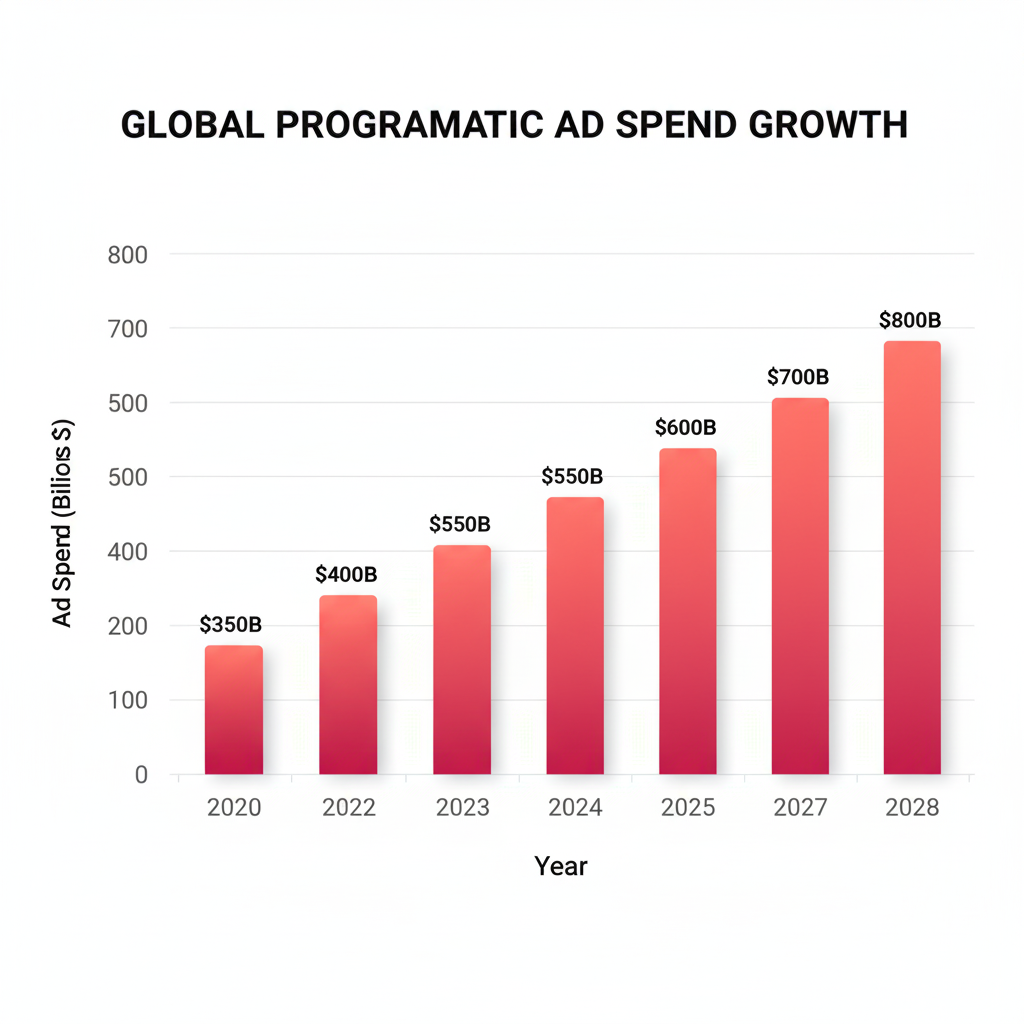
Programmatic advertising has evolved from a niche technology into the dominant force in digital advertising, with global spend reaching $595 billion in 2024 and projected to hit nearly $800 billion by 2028. What makes this growth remarkable is the integration of artificial intelligence, transforming how ads are bought, placed, and optimized in real-time.
This comprehensive guide explores the intersection of programmatic advertising and AI, providing you with the insights, strategies, and best practices needed to succeed in 2025 and beyond.
What is Programmatic Advertising?
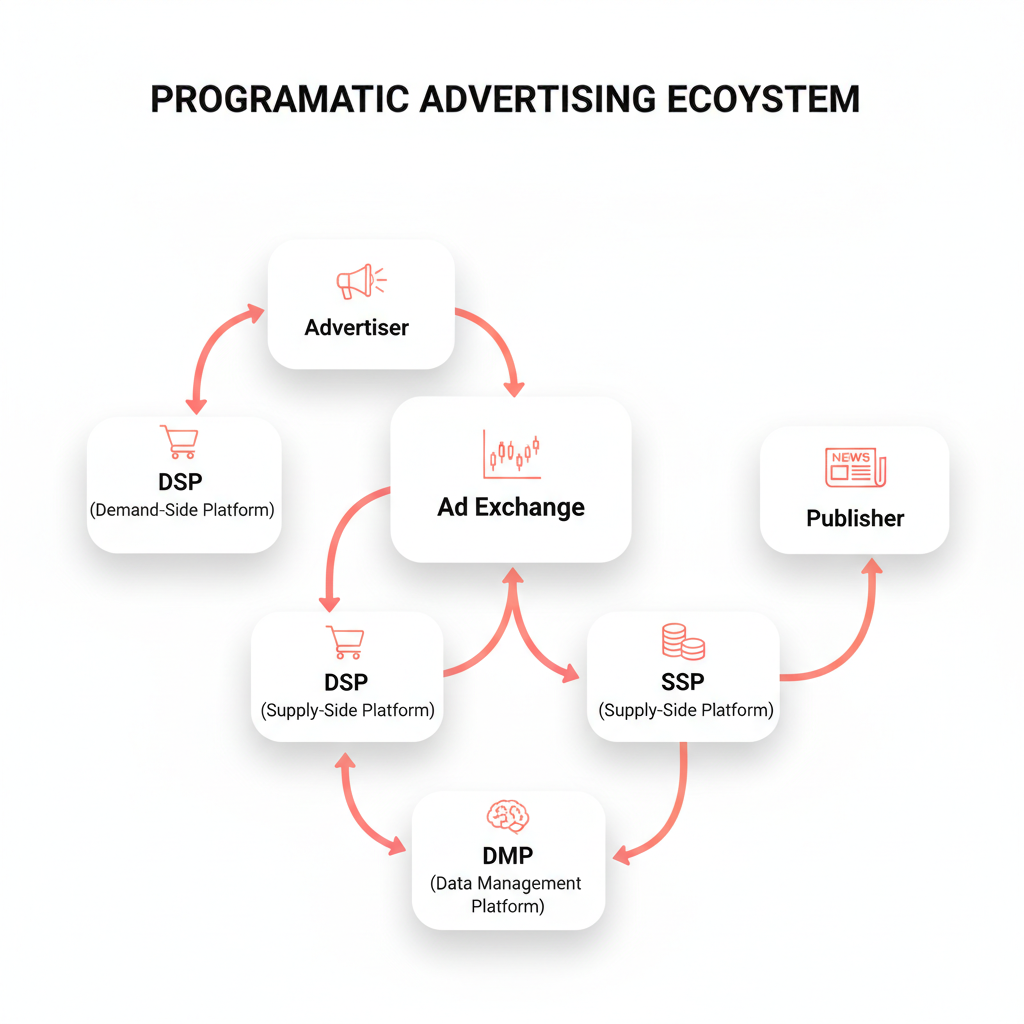
Programmatic advertising is the automated buying, placement, and optimization of digital ads using software and algorithms. Unlike traditional methods that require manual negotiations and insertions, programmatic technology leverages real-time bidding (RTB) and data-driven decision-making to serve ads to the right audience at the right time.
Key Components of Programmatic Advertising
- Demand-Side Platforms (DSPs): Allow advertisers to purchase ad inventory across multiple exchanges
- Supply-Side Platforms (SSPs): Enable publishers to sell their ad inventory programmatically
- Ad Exchanges: Digital marketplaces where DSPs and SSPs meet to transact
- Data Management Platforms (DMPs): Collect and analyze audience data for targeting
- Real-Time Bidding (RTB): Auction-based system for buying ad impressions in milliseconds
The Evolution: From Manual to AI-Powered
Programmatic advertising has undergone three major phases:
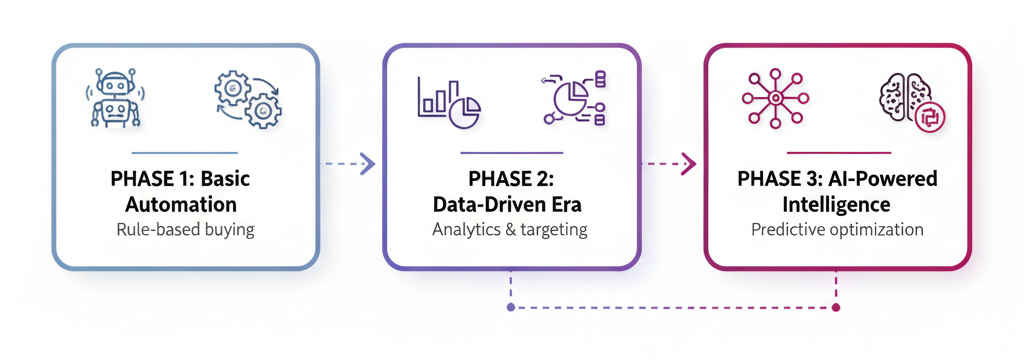
Phase 1: Basic Automation (2007-2015)
Early programmatic focused on automating repetitive tasks like ad buying and placement, primarily reducing human error and saving time through basic algorithmic decision-making.
Phase 2: Data-Driven Optimization (2015-2022)
Introduction of machine learning for audience targeting, bid optimization, and basic performance prediction. Third-party cookies enabled sophisticated tracking and retargeting strategies.
Phase 3: AI-Powered Intelligence (2023-Present)
Advanced AI and deep neural networks now handle creative optimization, predictive analytics, contextual targeting, and real-time personalization at scale. Privacy-first approaches replace cookie-based tracking.
The State of Programmatic Advertising in 2025
Market Landscape & Growth Drivers
The programmatic advertising ecosystem continues its explosive growth, driven by several key factors. North America maintains its leadership position, accounting for 44% of global programmatic ad spend, while emerging markets in Asia Pacific show rapid adoption rates.
The shift from traditional TV to digital video represents one of the most significant trends. Digital video ad spend hit $64 billion in 2024 and is projected to reach $72 billion in 2025, surpassing linear TV for the first time. This 2-3x faster growth rate compared to overall programmatic spend signals a fundamental shift in how audiences consume content.
How AI is Transforming Programmatic Advertising
Artificial intelligence has evolved from a supporting tool to the core engine driving programmatic advertising. In 2025, AI touches every stage of the advertising workflow, from media buying to creative production to performance measurement.
1. Intelligent Bid Optimization
AI-powered real-time bidding systems have revolutionized how advertisers compete for ad impressions. Unlike traditional rule-based bidding, modern AI systems use deep neural networks to analyze vast amounts of data in milliseconds, considering factors like:
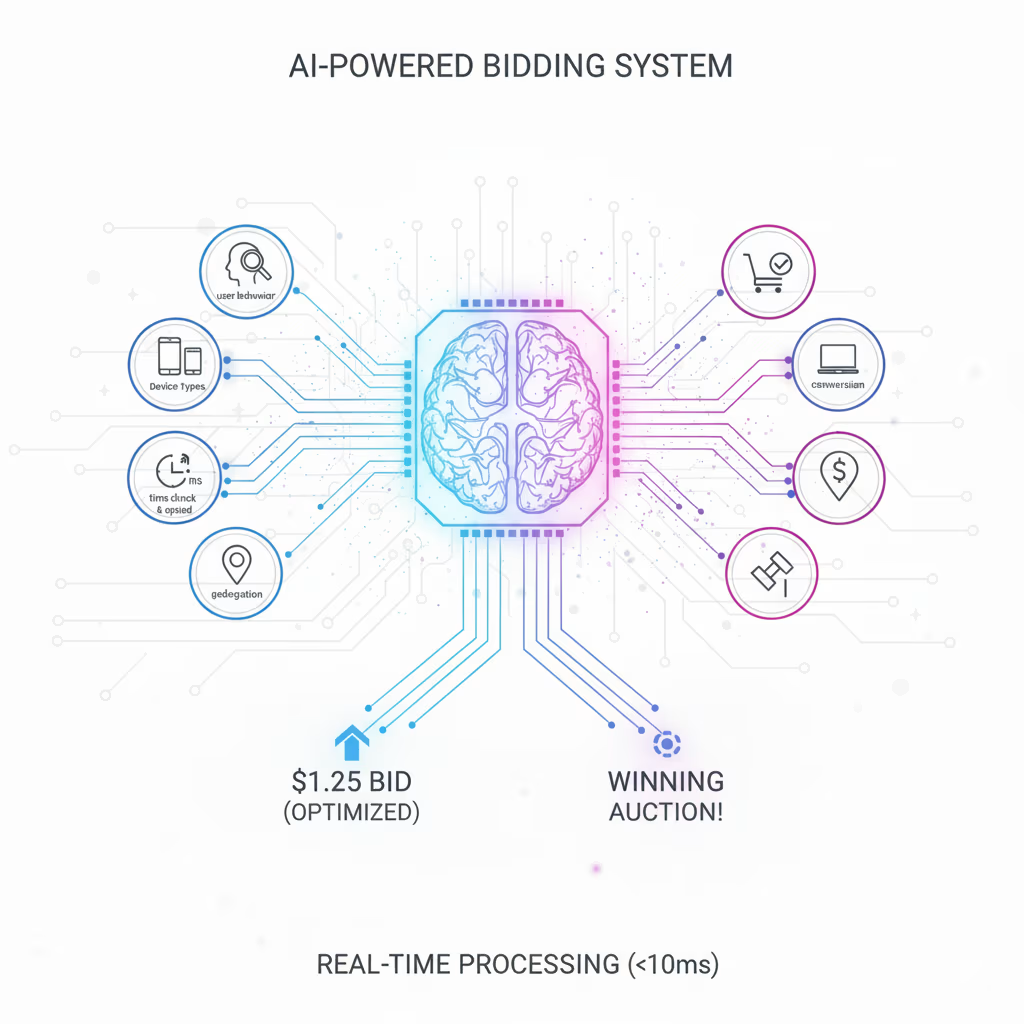
- User intent and behavior patterns
- Historical performance data across similar audiences
- Time of day, device type, and contextual signals
- Competitive landscape and bid price elasticity
- Expected conversion probability and lifetime value
These systems employ sophisticated techniques like bid shading (adjusting bids to win at the lowest possible price) and dynamic pacing (distributing budget optimally throughout the campaign period) to maximize return on ad spend.
AI-powered bidding has demonstrated the ability to increase Return on Advertising Spend (ROAS) by up to 58% while reducing Cost per Acquisition (CPA) by 30% through precise optimization.
2. Dynamic Creative Optimization (DCO)
Dynamic Creative Optimization represents one of the most transformative applications of AI in programmatic advertising. DCO automatically assembles and personalizes ad content in real-time based on user data, behavioral signals, and contextual information.
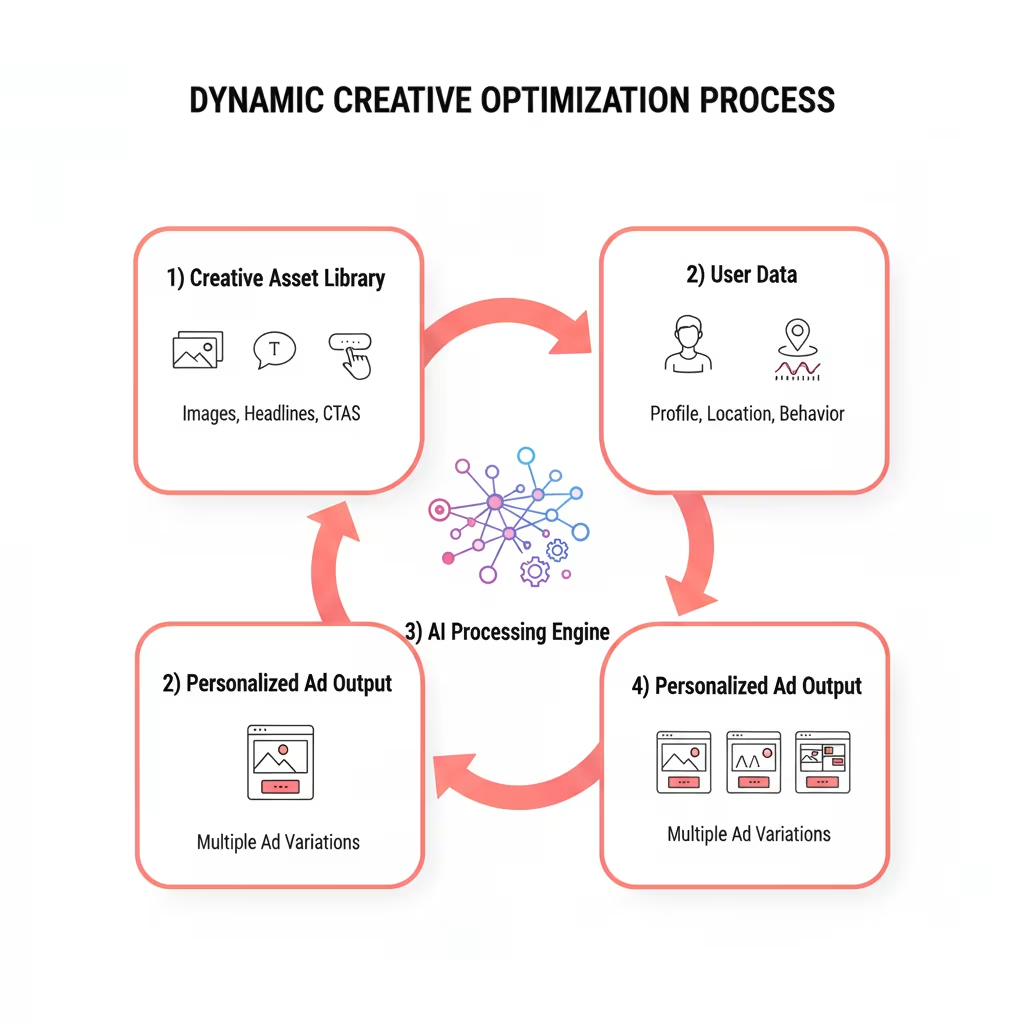
How DCO Works
Creative Asset Library
Advertisers create a pool of modular components: multiple images, headlines, body copy, calls-to-action (CTAs), and interactive elements. Each component is designed to appeal to different audience segments.
Data Collection & Analysis
AI systems aggregate data from multiple sources including user behavior, demographics, location, device type, time of day, weather conditions, and browsing history.
Real-Time Assembly
When an ad impression opportunity arises, the DCO engine processes user data in milliseconds and dynamically assembles the most relevant combination of creative elements.
Continuous Learning
Machine learning algorithms continuously test different combinations, measuring performance and refining which creative elements work best for specific audience segments.
DCO Variables for Personalization
Modern DCO systems can dynamically adjust ads based on:
DCO Success Example
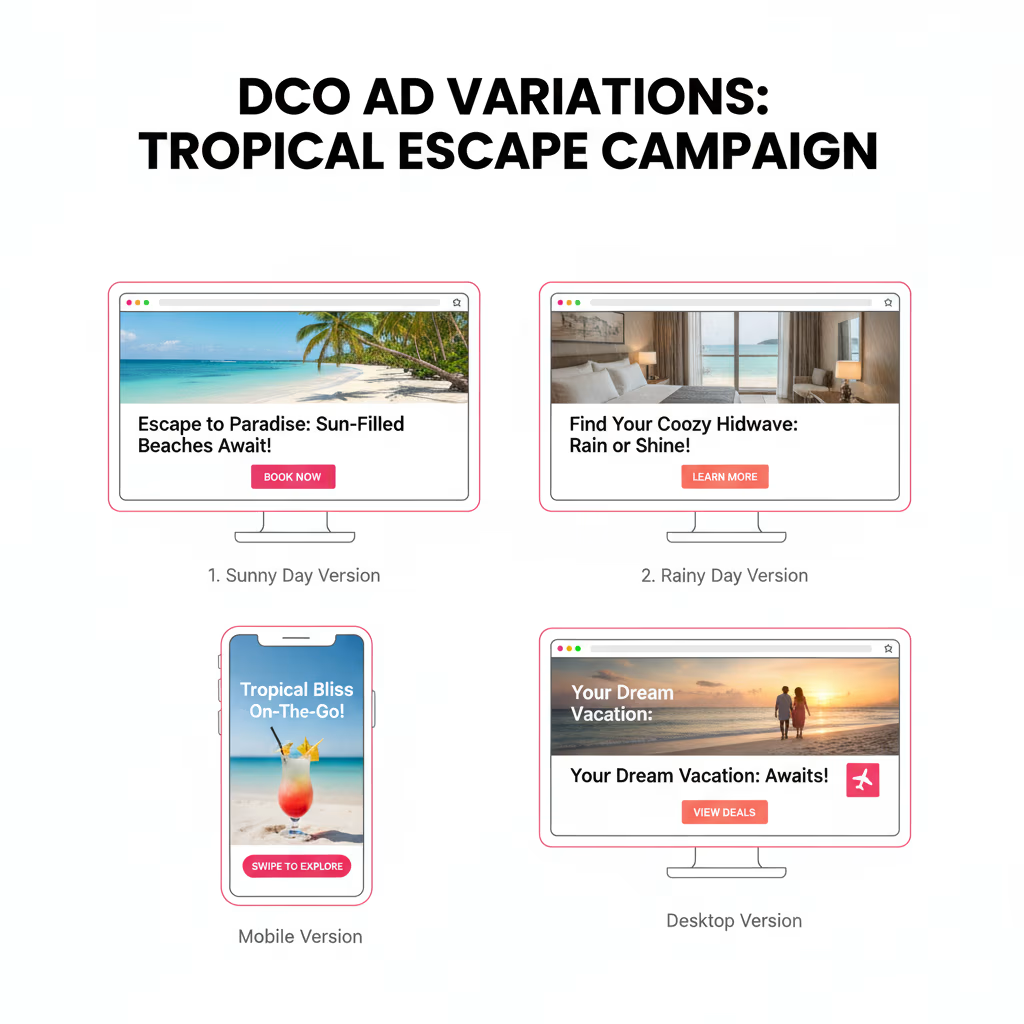
Consider a luxury travel company using DCO: At 2 PM on a sunny day, the ad displays "Escape to paradise with exclusive tropical getaways." When rain begins at 5 PM, the same campaign automatically shifts to "Rainy day blues? Plan your sunny escape today." This contextual adaptation happens without manual intervention, driven by real-time weather data and AI decision-making.
3. Predictive Analytics & Audience Intelligence
AI-powered predictive analytics enable advertisers to anticipate market trends and consumer behavior before they fully materialize. Machine learning models analyze historical data patterns to forecast future outcomes, allowing brands to stay ahead of the curve.
For example, predictive tools can identify an upcoming surge in travel demand based on search patterns, economic indicators, and seasonal trends. Travel brands can then proactively increase ad spend and adjust messaging to capture this demand before competitors, maximizing return on investment.
4. Privacy-First Contextual Targeting
With third-party cookies effectively obsolete in 2025, AI has become essential for contextual targeting strategies. Advanced natural language processing (NLP) and computer vision algorithms analyze webpage content, video context, and surrounding elements to understand the environment where ads appear.
Modern contextual AI goes far beyond simple keyword matching. These systems understand semantic relationships, emotional tone, brand safety considerations, and content quality to ensure ads appear in appropriate, high-value contexts that align with advertiser objectives.
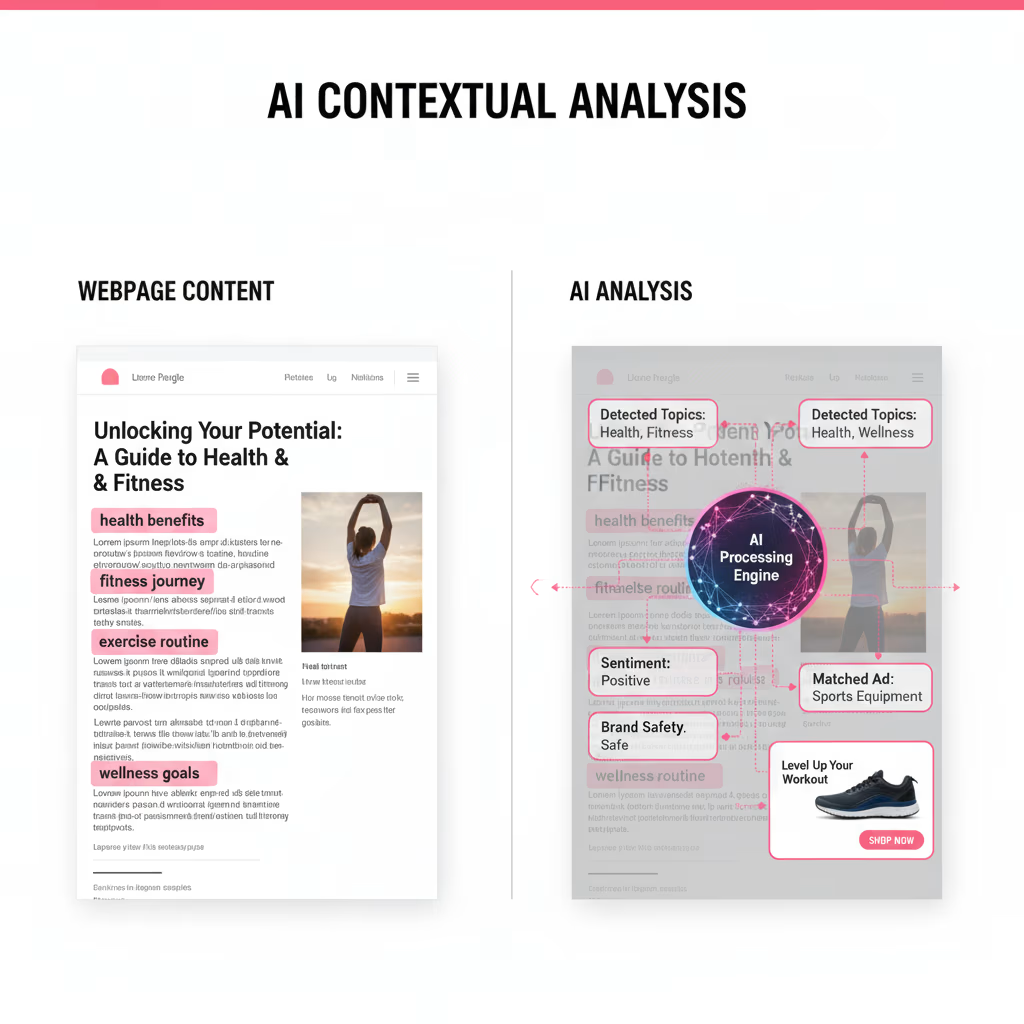
Contextual advertising is projected to reach $562.1 billion by 2030, with nearly 50% of CMOs planning to increase contextual targeting budgets in 2025.
Key Programmatic Advertising Trends in 2025
1. Connected TV (CTV) Advertising Dominance
Connected TV has emerged as one of the fastest-growing programmatic channels, fundamentally changing how advertisers reach audiences. With 75% of CTV inventory now sold programmatically, this channel combines the impact of television with the precision of digital targeting.
US digital video ad spend surged 18% year-over-year to $64 billion in 2024, with another 14% jump projected for 2025, reaching $72 billion. CTV ad spend specifically is expected to hit $30.4 billion in 2025, accounting for nearly 50% of total US digital video ad spend.
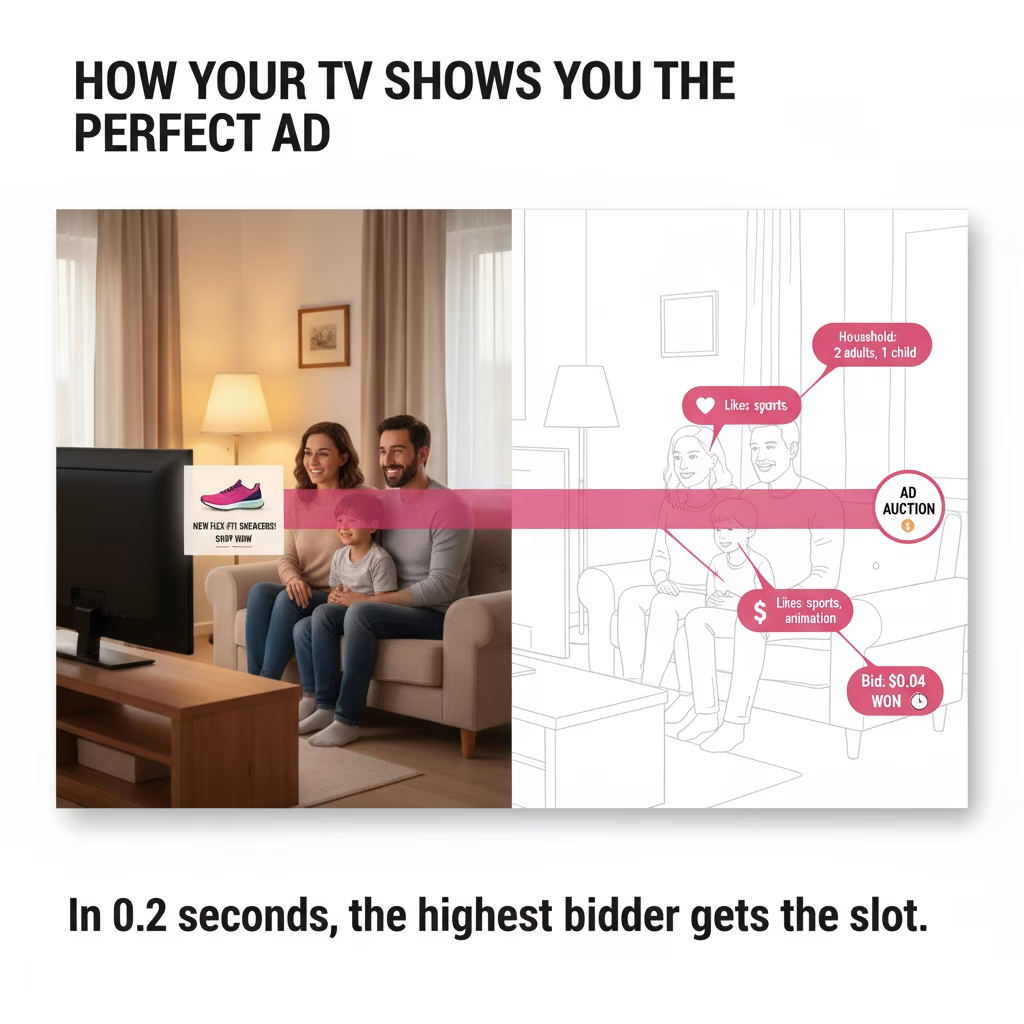
Why CTV Matters
- Premium Environment: Ads appear on large screens in living rooms, capturing undivided attention
- Advanced Targeting: Household-level targeting without relying on cookies
- Interactive Formats: Shoppable ads and interactive experiences drive direct response
- Better Measurement: Improved attribution and cross-device tracking capabilities
2. First-Party Data & Clean Rooms
The decline of third-party cookies has accelerated the shift toward first-party data strategies. Brands are no longer borrowing relationships from platforms—they're building direct connections with their audiences through owned channels.
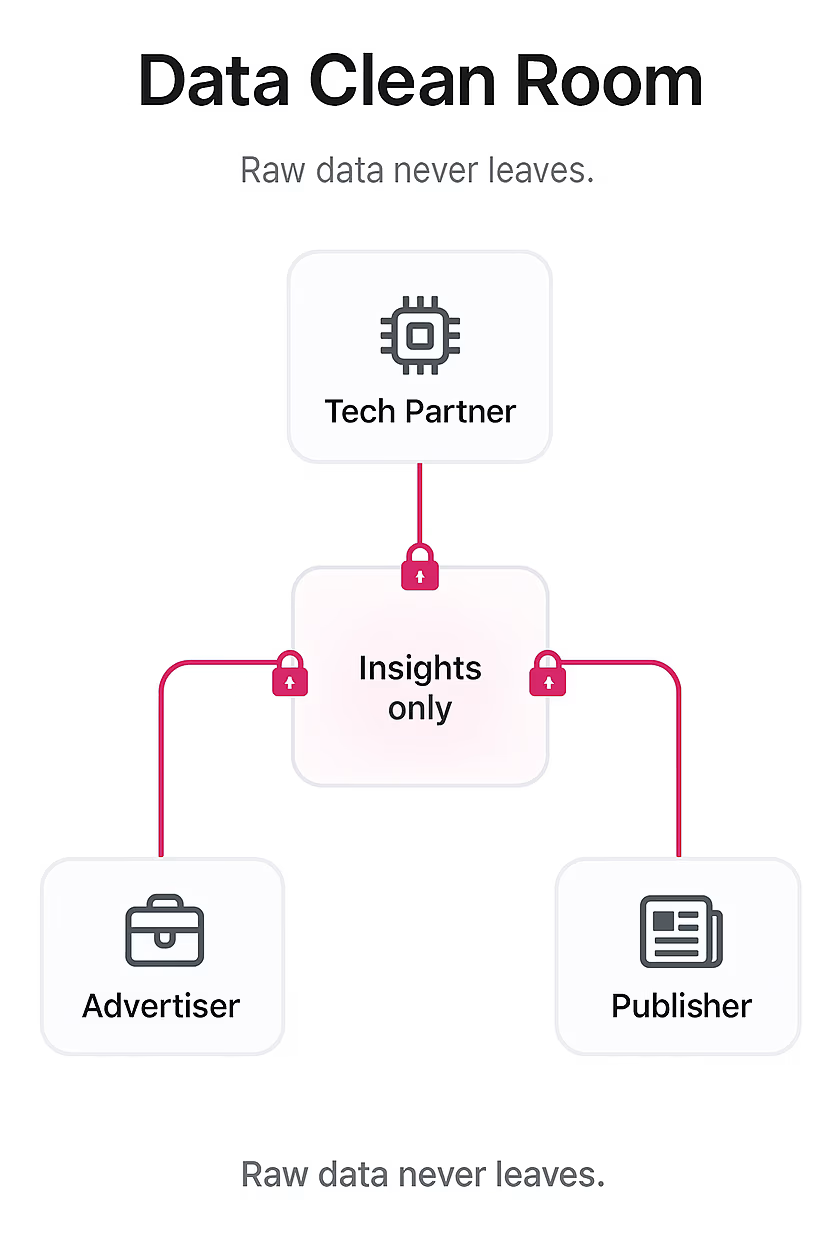
Data clean rooms have emerged as critical infrastructure, enabling secure collaboration between advertisers, publishers, and technology partners. These privacy-safe environments allow brands to match consented data, analyze audience overlap, build new segments, and activate campaigns while maintaining regulatory compliance.
First-Party Data Best Practices
- Implement robust data collection through loyalty programs, email sign-ups, and app behaviors
- Organize and maintain clean, accurate data in Customer Data Platforms (CDPs)
- Use look-alike modeling to expand reach to similar high-value audiences
- Leverage alternative identifiers like RampID and UID 2.0 for cross-platform targeting
- Partner with retail media networks that provide access to purchase intent data
3. Retail Media Networks
Retail media represents one of the fastest-growing programmatic channels, projected to expand from $114 billion in 2022 to over $176 billion by 2028. Amazon alone contributes $38 billion in ad revenue, while Walmart, Instacart, PayPal, and Uber have launched their own retail media platforms.
The appeal is straightforward: these platforms offer advertisers access to high-intent audiences at the point of purchase. When consumers search for products on retail sites, their purchase intent is explicit and immediate, making retail media extremely effective for driving conversions.
4. Programmatic Audio & Podcast Advertising
Voice-activated devices and audio streaming platforms have created new opportunities for programmatic advertising. The global audio streaming market is forecasted to expand to $89.77 billion by 2031, growing at a robust 13% annually.
Programmatic audio ads offer unique advantages: they reach users during activities where visual ads can't compete (driving, exercising, cooking), and they provide undivided attention in intimate listening environments. Dynamic audio ads can be personalized based on listener demographics, location, and contextual factors.
5. Digital Out-of-Home (DOOH) Evolution
Traditional outdoor advertising has undergone a digital transformation. Programmatic DOOH ad spend is on track to surpass $1 billion in 2025, accounting for 30% of all DOOH spend by 2026.
Modern DOOH campaigns leverage real-time data to display contextually relevant messages. Digital billboards can change creative based on weather, traffic conditions, local events, or time of day. For example, a coffee brand might show different messaging for morning commuters versus afternoon shoppers.
6. Brand Safety & Fraud Prevention
As programmatic spending grows, so do concerns about brand safety and ad fraud. Made-for-Advertising (MFA) impression volume increased 19% year-over-year in 2024, creating an urgent need for advanced verification tools.
AI-powered fraud detection systems now identify suspicious activity faster and more accurately, protecting advertisers from wasting spend on bot traffic or low-quality inventory. Brand safety tools ensure ads appear in appropriate contexts that align with brand values, preventing reputational damage.
7. Sustainability & Green Media Buying
Environmental considerations have entered programmatic advertising strategy. Brands increasingly ask about the carbon footprint of their media buys, prioritizing low-emission ad delivery paths and energy-efficient demand-side platforms.
Publishers who demonstrate carbon transparency in their supply chain gain competitive advantages as major brands add sustainability KPIs to campaign objectives. The MFA scandal exposed not just wasted ad spend but also unnecessary carbon emissions from serving ads to bot traffic.
Building Your Programmatic Strategy
Step 1: Define Clear Objectives
Successful programmatic campaigns start with precise goal-setting. Are you focused on brand awareness, lead generation, or direct sales? Your objectives determine which channels, formats, and optimization strategies make sense.
| Objective | Best Channels | Key Metrics |
|---|---|---|
| Brand Awareness | CTV, DOOH, Video | Impressions, Reach, Brand Lift |
| Consideration | Display, Native, Social | Engagement Rate, Time on Site, Video Completion |
| Conversion | Search, Retail Media, Retargeting | CPA, ROAS, Conversion Rate |
| Retention | Email, App-Based, CRM Retargeting | Customer Lifetime Value, Repeat Purchase Rate |
Step 2: Audience Strategy & Segmentation
Modern audience strategies combine multiple data sources to create sophisticated targeting models that balance precision with scale.
Audience Types in 2025
- First-Party Audiences: Your existing customers, email subscribers, website visitors, and app users
- Look-Alike Audiences: AI-generated segments that mirror your best customers' characteristics
- Contextual Audiences: Users engaging with relevant content, identified through NLP analysis
- Intent Audiences: Consumers showing purchase signals through search behavior and browsing patterns
- Predictive Audiences: AI-identified users likely to convert based on pattern recognition
The most effective campaigns layer multiple targeting signals. For example: First-party audience + Contextual relevance + Geographic targeting = 3-5x higher conversion rates than single-signal targeting.
Step 3: Creative Excellence
Even the most sophisticated targeting falls flat with mediocre creative. In 2025, successful programmatic campaigns invest heavily in diverse, high-quality creative assets designed for dynamic optimization.
Creative Best Practices
- Mobile-First Design: 70% of programmatic impressions occur on mobile devices
- Modular Components: Build creative libraries with interchangeable elements for DCO
- Clear CTAs: Every ad needs a compelling, unambiguous call-to-action
- Brand Consistency: Maintain visual identity while personalizing messaging
- Fast Load Times: Optimize file sizes for instant rendering across all devices
- A/B Test Everything: Continuously test headlines, images, colors, and formats
Step 4: Platform & Partner Selection
Choosing the right programmatic technology stack significantly impacts campaign performance. Your selection should align with your objectives, budget, and internal capabilities.
Major DSP Platforms
Step 5: Measurement & Attribution
Sophisticated measurement frameworks separate successful programmatic advertisers from those wasting budget. In 2025, multi-touch attribution has become standard, recognizing that customer journeys involve multiple touchpoints across channels.
Essential Metrics to Track
| Metric Category | Key Indicators | Why It Matters |
|---|---|---|
| Efficiency | CPM, CPC, CPA, CPV | Measures cost-effectiveness of media buying |
| Performance | CTR, VCR, CVR, ROAS | Indicates campaign effectiveness and user engagement |
| Quality | Viewability, Brand Safety Score, Invalid Traffic % | Ensures ads reach real humans in safe environments |
| Business Impact | Incremental Sales, Customer LTV, Market Share | Connects ad spend to bottom-line business outcomes |
Different channels require different attribution windows. CTV and upper-funnel display may need 7-30 day windows, while search and retail media typically use 1-7 day windows.
Advanced Programmatic Tactics
1. Sequential Messaging Strategies
Sequential messaging delivers different creative messages based on where users are in their journey. First exposures focus on awareness and education, middle exposures emphasize benefits and differentiation, and final exposures drive urgency with offers and CTAs.
AI systems track exposure frequency across devices and adjust messaging automatically, ensuring users progress through your narrative rather than seeing the same message repeatedly.
2. Dayparting & Moment Marketing
Advanced programmatic strategies align ad delivery with user behavior patterns throughout the day. Coffee brands advertise heavily during morning commutes, meal delivery services peak at lunch and dinner times, and entertainment apps focus on evening hours.
Real-time moment marketing takes this further, capitalizing on live events, trending topics, or cultural moments. When major events occur, programmatic systems can pivot creative and increase bids within minutes to capture attention.
3. Cross-Device & Omnichannel Orchestration
Modern consumers interact with brands across multiple devices and channels throughout their journey. Effective programmatic strategies recognize and respond to these cross-device behaviors.
For example, a user might research a product on mobile during their commute, compare prices on desktop at work, and finally make a purchase on tablet at home. Your programmatic strategy should deliver cohesive messaging across all these touchpoints, adjusting based on previous interactions.
4. Private Marketplace (PMP) Deals
While open exchanges offer scale, private marketplace deals provide premium inventory with guaranteed quality. PMPs allow advertisers to negotiate directly with publishers for exclusive access to their inventory at fixed or floor prices.
When to Use PMPs
- Brand safety is paramount and you need complete transparency
- You want guaranteed placement on specific high-value sites
- Premium inventory isn't available on open exchanges
- You're willing to pay more for quality and control
5. Frequency Capping & Pacing Strategies
Nothing damages campaign performance faster than ad fatigue. Intelligent frequency capping prevents overexposure while maintaining sufficient reach to drive results.
AI-powered pacing algorithms distribute budget optimally throughout the campaign period, avoiding the common pitfall of front-loading spend. These systems balance daily delivery goals with long-term efficiency objectives, adjusting bids dynamically based on remaining budget and time.
Challenges & Solutions in Programmatic Advertising
Challenge 1: Ad Fraud & Invalid Traffic
Ad fraud remains a significant challenge, with billions of dollars wasted annually on bot traffic and invalid impressions. Sophisticated fraud schemes evolve constantly, requiring equally sophisticated detection methods.
Implement multi-layered fraud prevention: pre-bid filtering, third-party verification (IAS, DoubleVerify), ads.txt adoption, and post-campaign analysis. Work only with exchanges and publishers who demonstrate commitment to quality inventory.
Challenge 2: Transparency & Hidden Fees
Programmatic's complex supply chain often obscures where ad dollars actually go. Publisher revenue might be only 40-50% of total spend, with the rest consumed by intermediaries, technology fees, and platform margins.
Demand supply path optimization (SPO) that eliminates redundant intermediaries. Request detailed log-level data from DSPs. Negotiate transparent fee structures and audit your tech stack regularly to understand true costs.
Challenge 3: Privacy Regulations & Compliance
GDPR, CCPA, and emerging privacy laws create complex compliance requirements. Violations result in significant fines and reputational damage.
Build privacy-first strategies from the ground up. Invest in consent management platforms (CMPs), prioritize first-party data collection with transparent privacy policies, and leverage contextual targeting that doesn't rely on personal identifiers.
Challenge 4: Attribution & Measurement Complexity
Multi-device, multi-channel customer journeys make accurate attribution incredibly challenging. Traditional last-click attribution significantly undervalues upper-funnel touchpoints.
Implement multi-touch attribution models that credit all meaningful interactions. Use marketing mix modeling (MMM) to understand channel contribution at the aggregate level. Conduct incremental lift studies to measure true campaign impact beyond correlation.
Challenge 5: Creative Fatigue & Banner Blindness
Users develop blind spots for repetitive ad formats, especially standard display banners. Creative fatigue reduces engagement and wastes impressions.
Rotate creative frequently using DCO. Experiment with native ad formats that blend with content. Leverage rich media, video, and interactive formats that break through banner blindness. Test emerging formats like playable ads and augmented reality experiences.
The Future: What's Next for Programmatic Advertising
Generative AI & Creative Production
Generative AI is revolutionizing creative production, enabling brands to generate hundreds of ad variations instantly. AI tools can create images, write copy, produce video content, and even generate voiceovers in multiple languages—all at a fraction of traditional production costs.
By 2026, it's estimated that 80% of creative assets will involve some form of AI assistance. This doesn't replace human creativity; instead, it amplifies creative teams' capabilities, allowing them to focus on strategy and big ideas while AI handles execution and variation.
Predictive Bidding & Self-Optimizing Campaigns
The next generation of AI will move from reactive optimization to predictive strategy. These systems will anticipate market conditions, competitor behavior, and audience shifts before they fully materialize, adjusting campaigns proactively.
Self-optimizing campaigns will require minimal human intervention, automatically adjusting budgets across channels, creating new audience segments, generating creative variations, and even recommending strategic pivots based on performance trends.
Immersive Formats: AR, VR, and the Metaverse
As virtual and augmented reality technologies mature, programmatic advertising will extend into immersive environments. Virtual showrooms, AR try-on experiences, and metaverse activations will become standard campaign components.
Programmatic platforms are already building infrastructure to buy and serve ads in virtual worlds, 3D spaces, and AR applications. These formats offer unprecedented engagement opportunities but require new creative approaches and measurement frameworks.
Blockchain & Transparency
Blockchain technology promises to solve programmatic's transparency challenges by creating immutable records of every transaction in the supply chain. While adoption remains limited in 2025, pilot programs demonstrate the technology's potential to reduce fraud, eliminate redundant intermediaries, and ensure publishers receive fair compensation.
Quantum Computing & Real-Time Optimization
Looking further ahead, quantum computing could revolutionize programmatic optimization. Processing power that makes today's systems look primitive will enable real-time analysis of virtually infinite data points, creating hyperpersonalized experiences at massive scale.
Getting Started: Your Action Plan
Audit Your Current State
Evaluate existing campaigns, technology stack, data assets, and team capabilities. Identify gaps and opportunities for improvement.
Build Your Data Foundation
Implement robust first-party data collection, organize data in a CDP, establish clean room partnerships, and ensure privacy compliance.
Select Technology Partners
Choose DSP, verification, attribution, and creative platforms aligned with your objectives. Start with one or two core platforms rather than spreading across too many.
Launch Pilot Campaigns
Start with controlled tests across 2-3 channels. Focus on learning and optimization rather than immediate scale. Measure rigorously and iterate based on data.
Scale What Works
Once you've identified winning strategies, expand budgets, add channels, and increase sophistication. Continuously test new tactics and technologies.
Optimize & Innovate
Establish regular optimization cycles. Stay informed about emerging trends and technologies. Never stop testing and learning.
Key Takeaways
- AI is Essential: Artificial intelligence now powers every aspect of programmatic advertising, from bidding to creative to measurement. Embrace AI-powered tools to remain competitive.
- Privacy-First Wins: Third-party cookies are gone. Build strategies around first-party data, contextual targeting, and privacy-compliant solutions.
- CTV is King: Connected TV represents the fastest-growing programmatic channel, combining TV's impact with digital's precision.
- Creative Matters: Sophisticated targeting means nothing without compelling creative. Invest in diverse, high-quality assets optimized for dynamic delivery.
- Measure Everything: Implement robust attribution and measurement frameworks. What gets measured gets optimized.
- Quality Over Quantity: Focus on quality inventory and meaningful engagement rather than maximizing reach at the lowest CPM.
- Stay Agile: The programmatic landscape evolves rapidly. Continuous learning and adaptation separate winners from losers.
- Test Relentlessly: Every campaign should include structured testing of new tactics, channels, creative approaches, and technologies.
Final Thoughts
Programmatic advertising in 2025 represents the most sophisticated, data-driven, and effective form of digital advertising ever created. The integration of artificial intelligence has transformed what's possible, enabling personalization at scale, real-time optimization, and predictive insights that were science fiction just a few years ago.
Yet technology alone doesn't guarantee success. The most effective programmatic advertisers combine cutting-edge tools with strategic thinking, creative excellence, and relentless focus on delivering value to their audiences. They view programmatic not just as a buying mechanism but as a comprehensive approach to understanding and engaging customers across every touchpoint.
The opportunity ahead is enormous. As programmatic continues expanding into new channels—from CTV to audio to DOOH to immersive environments—advertisers who master these technologies will capture disproportionate returns. Those who fail to adapt will find themselves outmaneuvered by more sophisticated competitors.
Start building your programmatic capabilities today. The learning curve is steep, but the rewards for those who commit to excellence are substantial. Welcome to the future of advertising.
Ready to Transform Your Advertising Strategy?
Partner with Adzeta to leverage cutting-edge programmatic technology and AI-powered optimization for your campaigns.
Get Started Today© 2025 Adzeta. All rights reserved.